How to Get a T-money Card in Korea (and Use It Without Mistakes)
By the Haesul Global desk (AI-assisted). Information as of October 28, 2026 (KST). Fares change, so check the operators’ official pages before you travel.
Quick answer: A T-money card is Korea’s rechargeable transport card. Buy one at any convenience store (GS25, CU, 7-Eleven, emart24) or a subway station machine for roughly 3,000 to 5,000 won, then top it up with cash at the same places. Tap it when you board and, on buses, again when you get off, so you get the free transfer discount. It works on subways, buses and many taxis across the country. Official details are on the T-money website and VisitKorea.
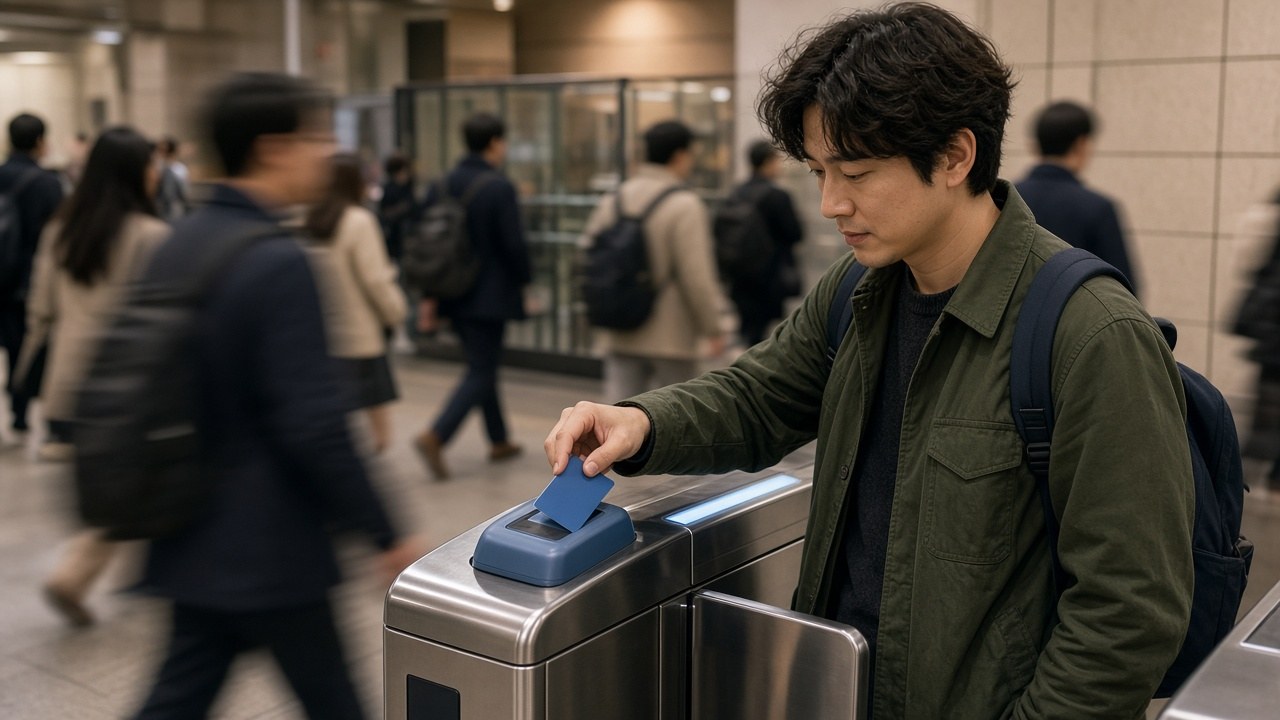
Why you want a card instead of single tickets
You can buy single-journey subway tickets in Seoul, but they cost more than a card fare, need a deposit that you must refund at a machine after each ride, and do not give you the transfer discount between subway and bus. With a T-money card you pay the lower card fare, transfer for free or almost free within the time limit, and never queue at a ticket machine again. For anyone staying more than a day or two, the card pays for itself almost immediately.
T-money is also accepted outside Seoul. The same card works on subways in Busan, Daegu, Gwangju and Daejeon, on city buses in most regions, on many intercity and airport buses, in a large share of taxis, and even at convenience stores as a small payment method.
What it costs: card, fares and passes
| Item | Typical price (2026) | Notes |
|---|---|---|
| Plain T-money card | About 3,000–4,000 won | Designs vary; character cards cost more |
| Seoul subway base fare (card) | 1,550 won | Distance-based surcharge beyond 10 km |
| Seoul city bus base fare (card) | 1,500 won | Blue trunk and green branch buses |
| Transfer subway ↔ bus | Free or small top-up | Within 30 minutes (60 minutes late at night) |
| Climate Card short-term pass | 1–7 day options | Unlimited Seoul subway and bus; check current price |
| Balance refund fee | 500 won | Convenience stores refund small balances |
Sources: Seoul Metropolitan Government transport fares, T-money, VisitKorea. Fares are base adult fares as of October 2026 and may change.
Step 1: Buy the card
The easiest place is any convenience store. Ask for “T-money card” at the counter; staff in tourist areas understand the English. You can also buy one from vending machines in subway stations and at Incheon and Gimpo airports. Cards usually come with a zero balance, so you will need to top up right away.
If you want a card that also works as a debit card for shopping, look at prepaid travel cards such as WOWPASS or the Korea Tour Card, sold at airports and some hotels. They include T-money functions for transport. The trade-off is that some fees and top-up options differ, so read their terms first.
Step 2: Top it up (with cash)
This is the step that surprises most visitors: T-money top-ups are mostly cash only. You can recharge at convenience stores by handing the card and cash to the cashier, or at the yellow recharge machines in subway stations, which accept 1,000, 5,000, 10,000 and 50,000 won notes. Foreign credit cards usually cannot be used to top up at these machines. Keep at least 10,000 won in cash when you arrive, and withdraw more from a global ATM at a convenience store or bank if needed.
A good rule of thumb is to keep 10,000 to 20,000 won on the card. A day of sightseeing in Seoul with four or five rides typically uses 6,000 to 9,000 won.
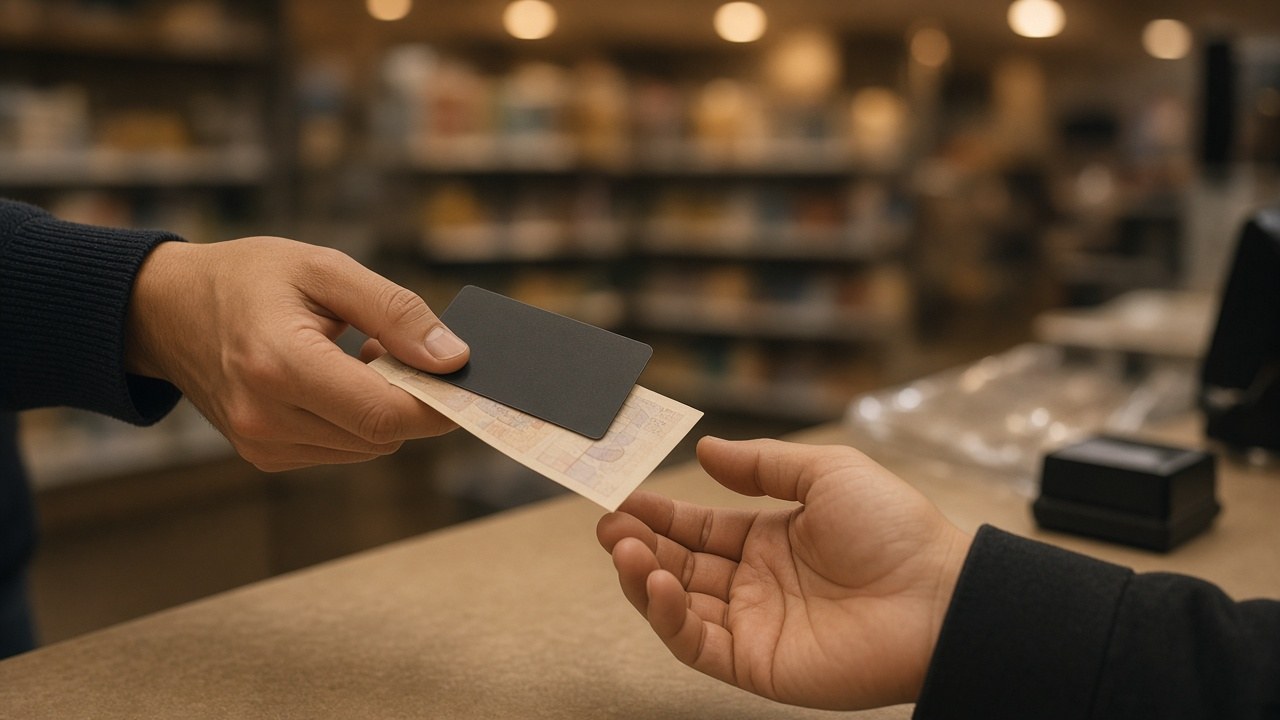
Step 3: Tap in, and tap out on buses
On the subway, tap the card on the gate reader when you enter and again when you leave; the fare is calculated by distance. On buses, tap the reader when you board at the front door, and tap again on the reader by the rear door when you get off. If you skip the tap-out, you lose the transfer discount on your next ride and may be charged extra. When several people travel together, each person needs their own card; you cannot pay for two people with one tap on most Seoul gates.
How transfer discounts work
In Seoul and the capital area, you can transfer between subway and bus, or between buses, up to four times within 30 minutes of getting off (the window extends to 60 minutes between 9 p.m. and 7 a.m.). You pay the base fare once, plus a small distance surcharge if your total trip is long. This makes trips that combine a bus and a subway line much cheaper than paying for each separately.
Using T-money in taxis and shops
Most Seoul taxis accept T-money: just tap the card on the reader near the meter at the end of the ride. Many taxis also accept foreign credit cards. At convenience stores, you can pay for small purchases with your T-money balance, which is handy for using up leftover money before you leave Korea.
Getting a refund before you fly home
At convenience stores you can get a refund of a remaining balance of up to 20,000 won, minus a 500 won fee. Larger balances are refunded at T-money service centers or certain subway stations. The card itself is not refunded, so many travelers simply keep it as a souvenir for the next trip.
Tourist alternatives: unlimited passes
If you will ride a lot in Seoul, look at the Climate Card short-term pass (기후동행카드). It offers unlimited rides on Seoul subways and city buses for one, two, three, five or seven days; check the current price on the Seoul city website before you buy. It does not cover every line outside Seoul, so check the coverage map before you buy. For long-term residents, the national K-Pass program refunds part of your monthly transport spending; it requires a Korean bank account and phone number, which our guide to living in Korea as a foreigner explains how to get.
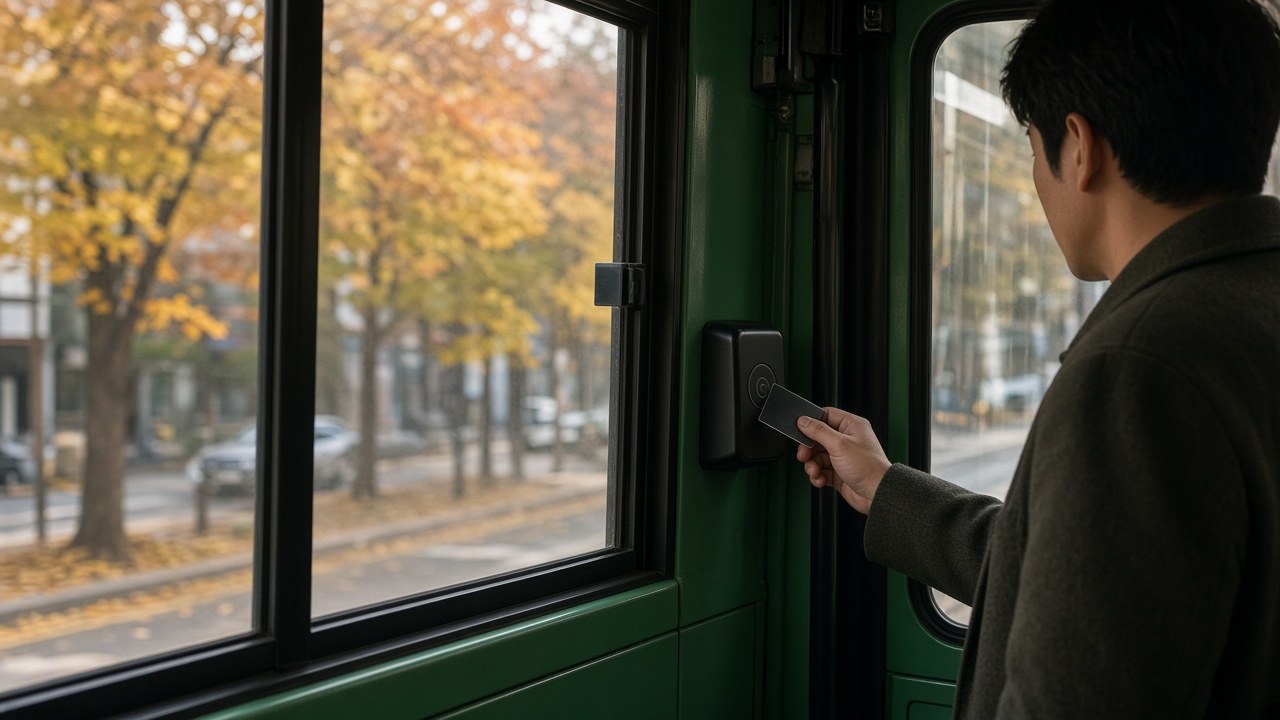
Common mistakes
- Trying to top up with a foreign credit card. Bring cash.
- Forgetting to tap out on buses. You lose the transfer discount.
- Sharing one card between two people on the subway. Most gates allow one fare per tap.
- Keeping a large balance when leaving. Convenience stores refund only small amounts.
- Assuming the Climate Card works everywhere. It is designed for Seoul.
Plan the rest of your trip
Autumn is peak travel season in Korea. If you are hiking or visiting the countryside, read about scrub typhus symptoms in autumn, and if you will stay longer, our Korean national health checkup guide for expats explains what the health system offers.
Frequently asked questions
Can I buy a T-money card at the airport?
Yes. Convenience stores and machines at Incheon and Gimpo airports sell them, and you can top up there too.
Can I pay for T-money with Apple Pay or a foreign card?
In most cases, no. Top-ups at convenience stores and station machines are cash, though some prepaid travel cards offer card top-ups.
Does T-money work in Busan and Jeju?
Yes, on Busan’s subway and buses and on Jeju’s buses, as well as in many taxis nationwide.
Do children pay less?
Yes. Children’s and teenagers’ fares are discounted, but the card must be registered as a youth card on the T-money website or app.
What happens to leftover money?
Spend it at convenience stores or get a refund of up to 20,000 won there for a 500 won fee.
Official sources
- T-money (official): https://www.t-money.co.kr
- Seoul Metropolitan Government subway fares: https://english.seoul.go.kr/policy/transportation/modes-of-transport/subway/
- Seoul Metro fare guide: http://www.seoulmetro.co.kr/kr/page.do?menuIdx=354
- Korea Tourism Organization (VisitKorea): https://english.visitkorea.or.kr
- Korea Travel Hotline: 1330
Fares and pass prices are base adult fares as of October 2026 and may change; check the official sites before you travel.
Related guides on this site
Travel & Living
- Korea Public Holidays 2027: Every Date, 7 Substitute Days and 10 Long Weekends
- Best eSIM and SIM Options for Korea Travelers: How to Choose
- K-ETA vs Visa-Free Entry to Korea: Who Needs What in 2026
- Living in Korea as a Foreigner: The Complete Guide to Your First 90 Days
Economy
- Korea Minimum Wage 2027: 10,700 Won an Hour, and What It Means per Month
- Korea National Pension Lump-Sum Refund for Foreigners: Who Qualifies and How to Claim
- Korea’s 19% Flat Tax for Foreign Workers: When It Actually Saves Money
- Korea Comprehensive Real Estate Tax 2026: When and How to Pay
- Korea National Pension Age by Birth Year: When You Can Claim
- Korea Q3 2026 GDP: 1.0% Growth (Advance Estimate), Explained
- Korea’s Supply-Chain “Lead Company” Program: Applications Close Nov 16, 2026
- Korea’s September 2026 Jobs Report: +113,000 Jobs, Unemployment at 2.0%
- Korea’s New Crypto Transfer Reporting Rule: What the Draft Says and How to Comment by Oct 26
- KOSPI Close, October 2026: the 21% Slide, Rebound and Month-End
- Korea COFIX Rate Explained: Latest 3.43% (September) and How It Moves Your Loan
- Alaska LNG and the $54 Billion Figure: What Washington and Seoul Each Say
- Korea’s Energy Voucher 2026: How the Winter Heating Subsidy Works, Who Qualifies and How Much
- Bank of Korea Base Rate 2026: Held at 3.00% on October 22, Next Decision November 26
Health
- ALT Blood Test High? What Elevated ALT and AST Can Mean
- Stroke Signs: CDC BE FAST Check, and When to Call 911, 999 or 119
- Scrub Typhus in Korea: Autumn Symptoms, the Black “Eschar” and How to Prevent It
- Menopause Symptoms Checklist: What the NHS, the US NIH and Korea’s KDCA Say
- Blood Pressure Ranges Explained: US, UK, WHO and Korea, Agency by Agency
- Cholesterol Levels Explained: LDL, HDL, Triglycerides and Total Cholesterol, Agency by Agency
- Korea’s National Health Checkup by Age: What Expats and Foreign Residents Need to Know
- Wegovy and Mounjaro Side Effects: What the FDA and EMA Say, and Korea’s Reported NAION Case
- South Korea COVID and Flu Vaccines 2026: Who Can Get Them, Start Dates, and Late-October Uptake





5 Comments