High AST and ALT? What Your Liver Enzyme Results Mean, per MedlinePlus and Korea’s KDCA
By the Haesul Global health desk (AI-assisted). Information as of October 16, 2026 (KST).
Quick answer: AST and ALT are enzymes released into the blood when liver cells (and, for AST, other cells) are damaged. High levels can be a sign of liver injury, but one result is not a diagnosis. MedlinePlus (US National Library of Medicine) says many things — age, sex, weight, exercise, some medicines and supplements — can affect results. Reference ranges vary by lab, so compare your result with the range printed on your own report.
If you had a health checkup in Korea or elsewhere and see “AST,” “ALT,” “GOT” or “GPT” flagged on your report, here is what two official health sources say.
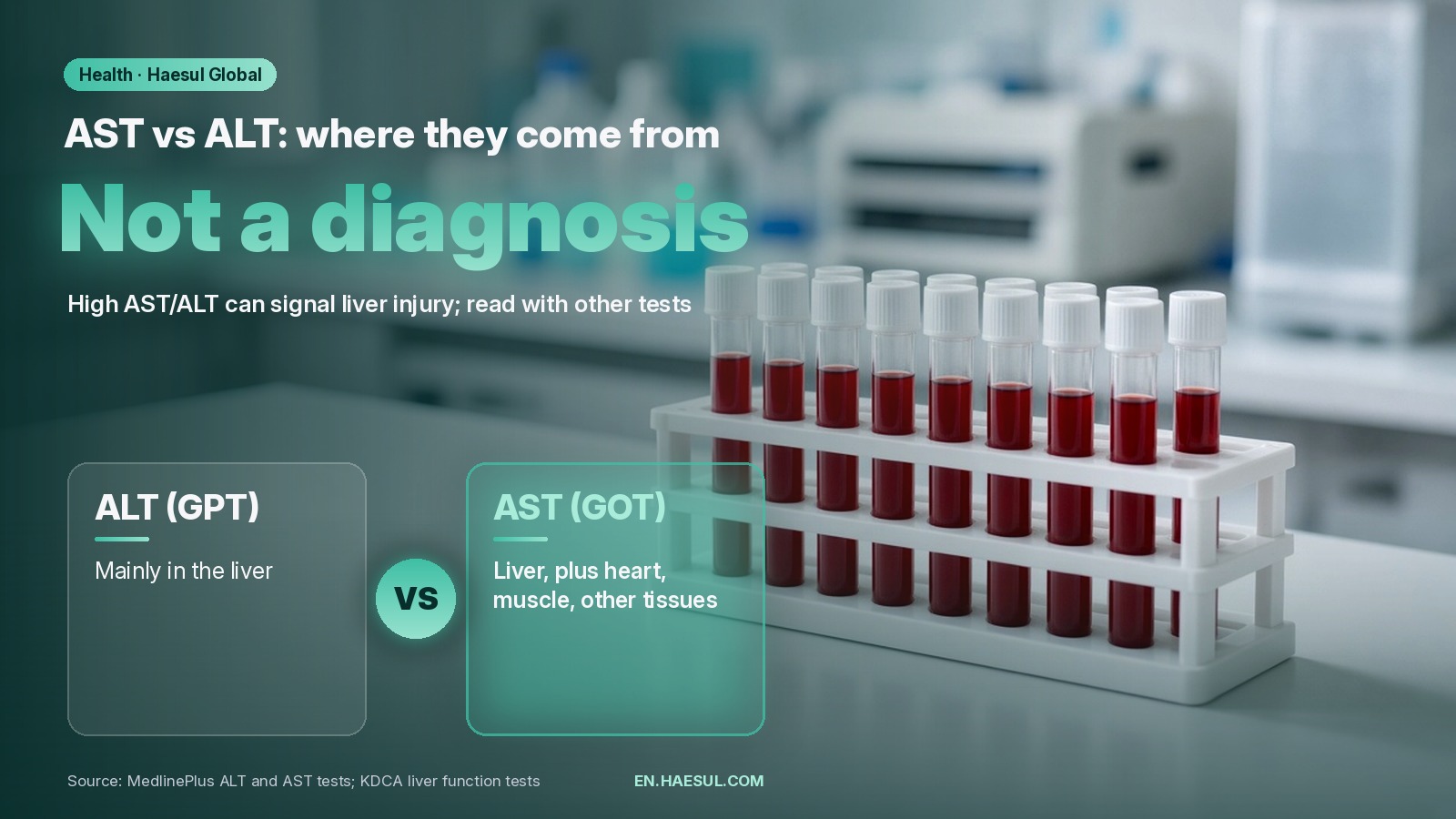
1) AST vs ALT at a glance
| Point | MedlinePlus (US) | KDCA (Korea) |
|---|---|---|
| ALT is found | Mainly in the liver | Mainly only in the liver |
| AST is found | Mainly in the liver, also heart, muscles and other tissues | Liver cells plus heart, muscle, blood cells and most of the body |
| Other names | ALT = SGPT/GPT; AST = SGOT | ALT = GPT; AST = GOT |
| Reference range | Not given as a number | AST 0–40 IU/L; ALT 0–40 IU/L (according to KDCA; varies by lab) |
| Lab differences | Results affected by many factors | Ranges differ slightly between labs; use your lab’s range |
Why it matters: Because ALT is mostly in the liver, MedlinePlus says an ALT test checks more specifically for liver damage. AST can rise from heart or muscle problems too.
2) Other liver tests on the same report (KDCA ranges)
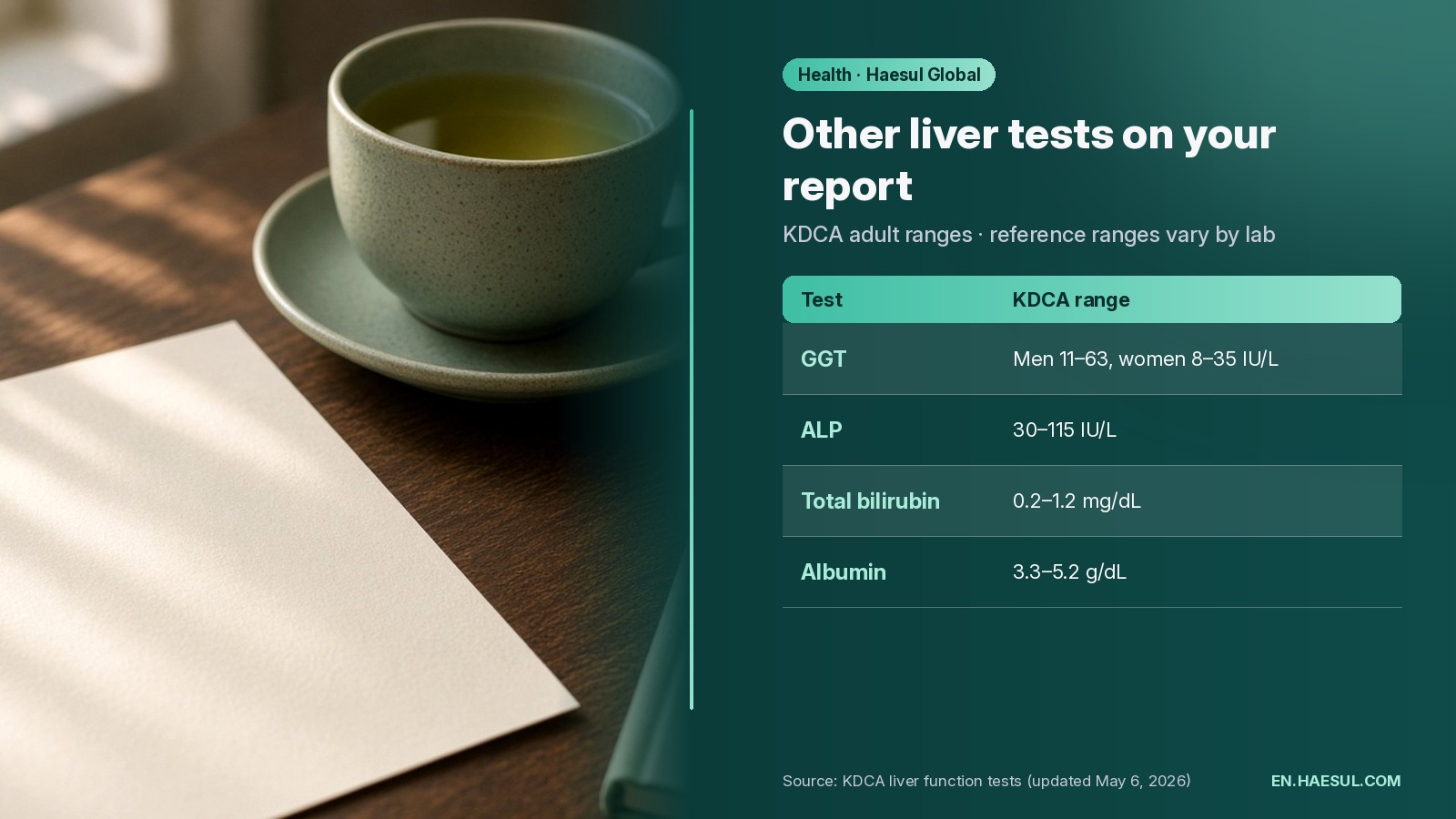
KDCA’s liver function test page gives these reference ranges (adults unless noted):
| Test | KDCA reference range | What it mainly reflects |
|---|---|---|
| GGT (γ-GTP) | Men 11–63, women 8–35 IU/L | Bile duct; also alcohol, obesity, some medicines |
| ALP | Adults 30–115 IU/L (children 60–300) | Bile flow; also bone |
| Total bilirubin | 0.2–1.2 mg/dL | Bile pigment; high levels can cause jaundice |
| Albumin | 3.3–5.2 g/dL | The liver’s ability to make protein |
These ranges are according to KDCA only. Reference ranges vary from lab to lab (KDCA says results should be read against the range your testing lab provides), so use the range on your own report.
3) What high results can mean
MedlinePlus lists possible causes of high ALT including hepatitis, infection, cirrhosis, liver cancer, other liver diseases, reduced blood flow to the liver, certain medicines (such as cholesterol or pain medicines) and poisons. For high AST it adds causes outside the liver such as heart problems, pancreatitis, mononucleosis, deep burns, seizures and surgery.
KDCA describes patterns doctors look at:
- Alcoholic hepatitis: AST is often 3–4 times ALT.
- Acute liver injury: AST rises first; after 24–48 hours ALT becomes higher.
- Advanced cirrhosis: AST and ALT may be normal or even low.
Both agencies say results must be read together with other tests and your situation. MedlinePlus adds that the ALT level is not related to how much the liver is damaged, and that an out-of-range result doesn’t always mean a condition that needs treatment.
4) Medicines and supplements (KDCA)
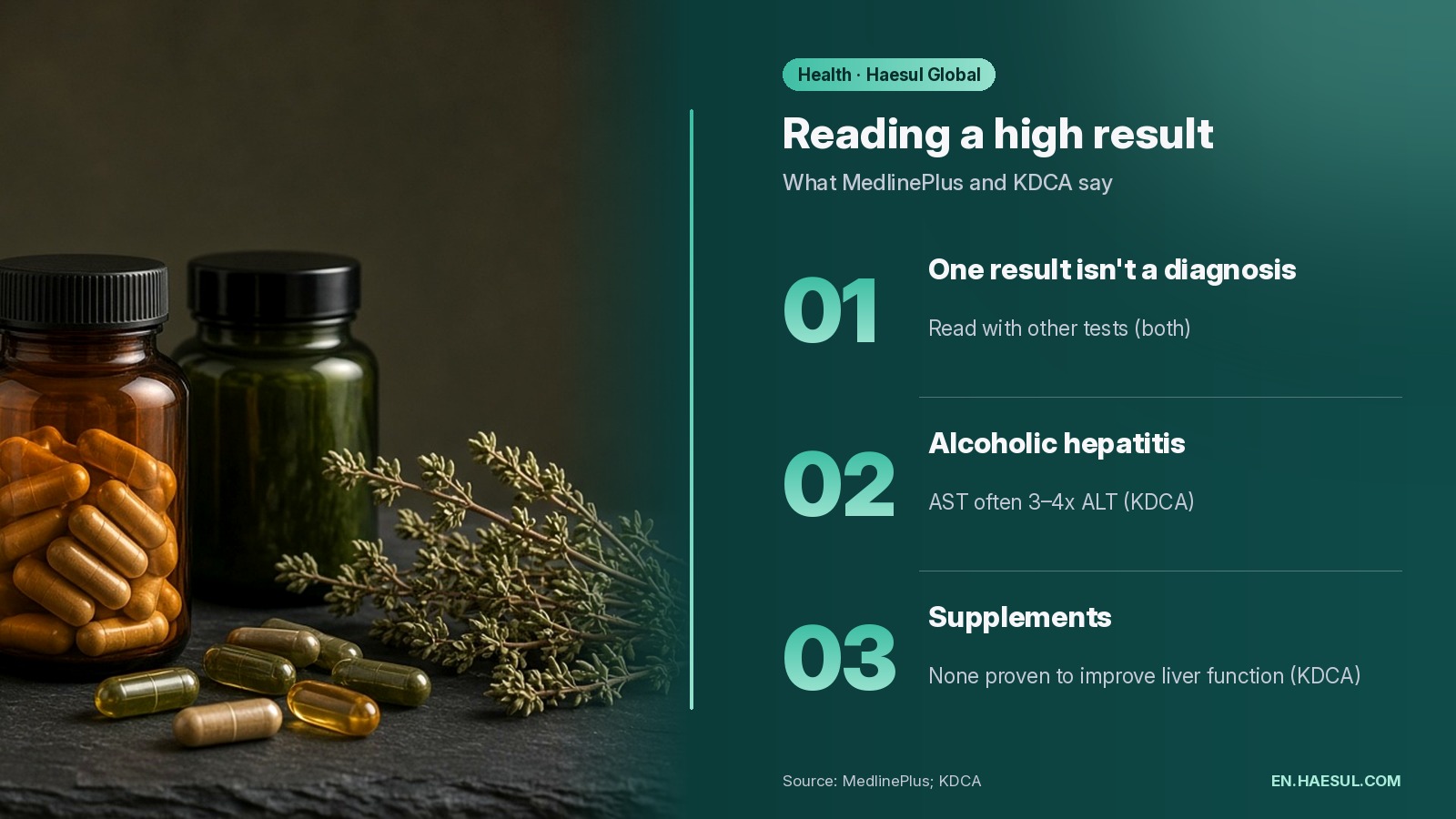
- KDCA says the most common causes of toxic liver injury in Korea are medicines, herbal medicines, health supplements and folk remedies.
- KDCA states that no commercially available supplement has been proven to improve liver function, and unverified supplements can worsen liver disease.
- MedlinePlus also notes certain medicines and dietary supplements can affect ALT results.
- Don’t stop a prescribed medicine on your own; both sources say to talk with your provider.
FAQ
Do I need to fast?
The sources differ. MedlinePlus says you usually need to fast for several hours (AST page: up to 12 hours) because the test is usually done with other blood tests. KDCA says most liver tests need no preparation, but 9–12 hours of fasting if cholesterol is included. Follow your clinic’s instructions.
Can exercise raise my numbers?
MedlinePlus lists intense exercise (ALT) and exercise (AST) among factors that can affect results.
What symptoms suggest liver damage?
MedlinePlus lists nausea, loss of appetite, fatigue, weakness, jaundice, belly swelling or pain, leg swelling, dark urine, pale stool and itching. KDCA notes liver disease often has no or vague symptoms early on.
This article summarizes public information from MedlinePlus and KDCA. It is not medical advice. Ask your doctor to interpret your results; don’t start or stop medicines or supplements on your own.
Korean-language version: 간수치 높으면 AST·ALT (Naver blog).
Sources
- MedlinePlus (US National Library of Medicine), “ALT Blood Test” (checked Oct 16, 2026) https://medlineplus.gov/lab-tests/alt-blood-test/
- MedlinePlus, “AST Test” (checked Oct 16, 2026) https://medlineplus.gov/lab-tests/ast-test/
- KDCA National Health Information Portal, “간기능검사” (liver function tests; updated May 6, 2026; checked Oct 16, 2026) https://health.kdca.go.kr/healthinfo/biz/health/gnrlzHealthInfo/gnrlzHealthInfo/gnrlzHealthInfoView.do?cntnts_sn=5444
- KDCA National Health Information Portal, “독성 간 손상” (toxic liver injury; updated Oct 6, 2026; checked Oct 16, 2026) https://health.kdca.go.kr/healthinfo/biz/health/gnrlzHealthInfo/gnrlzHealthInfo/gnrlzHealthInfoView.do?cntnts_sn=6585