Carbon Monoxide in Korea’s Winter: Boilers, Guesthouses, Camping Heaters and 119
Haesul Health desk (AI-assisted). As of 14 November 2026 (KST). Based on the Ministry of the Interior and Safety (MOIS) winter boiler and camping release of 30 October 2026, the National Fire Agency (NFA) carbon monoxide guidance, the Ministry of Trade, Industry and Resources (MOTIR) and Ministry of Culture, Sports and Tourism (MCST) alarm rules, Korea Gas Safety Corporation (KGS) leak guidance, the US CDC and the UK NHS.
Short answer: carbon monoxide (CO, 일산화탄소) is a colourless, odourless gas made when fuel burns badly, and in Korea in winter it most often comes from a faulty boiler or flue, a burning heater or cooker used in a closed space, or charcoal and gas heaters inside a tent or car. If you get a headache, dizziness, nausea or weakness that eases when you go outside, leave the room, open windows for fresh air and call 119. The best protection is a working CO alarm (일산화탄소 경보기) near where you sleep.
Why this matters if you live in or visit Korea
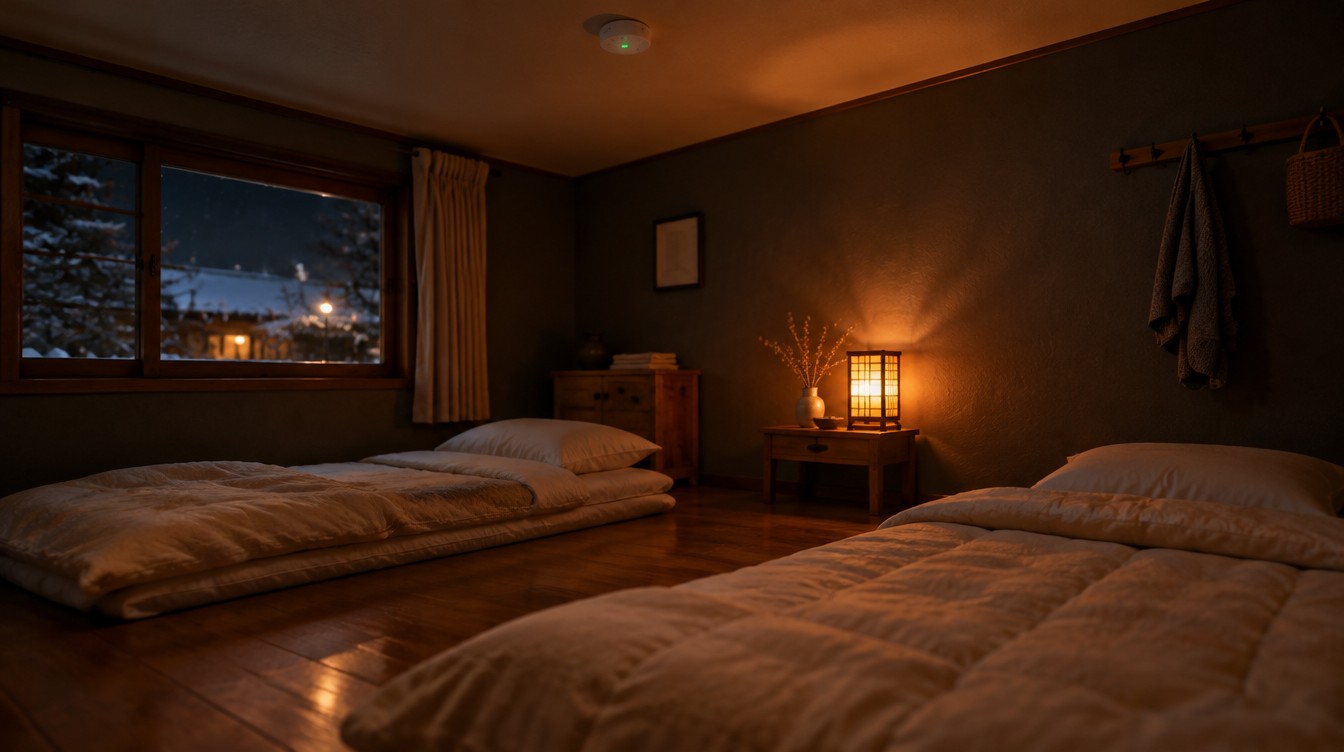
Most Korean homes are not heated by a central system you never see. MOIS says, citing the 2020 census, that 82% of Korean households use an individual boiler (개별난방 보일러) running on city gas, oil or electricity, 15% use district heating and 3% use central heating. An individual boiler is installed and looked after by each household, which MOIS says means more than fire risk: if exhaust gas is not vented properly or leaks back indoors, it can lead to CO poisoning. Many expats rent exactly this kind of flat, a studio (원룸) or an older villa (빌라), where the boiler is in a utility balcony or small boiler room and you may never have had it serviced.
Winter is also the season for guesthouses, farm stays and camping. Korean winter camping and “car camping” (차박, sleeping in a vehicle) have become common, and fire services keep issuing warnings each November. On 10 November 2026 Gangwon fire service reported, for its own province, 32 camping-related fires between 2023 and October 2026 (21 of them, 65.6%, put down to carelessness) and 5 suspected CO poisoning reports in the same period; in one case in Chuncheon in November 2023, a camper who had lit charcoal inside a tent while eating collapsed and was taken to hospital for oxygen treatment. Those are one region’s figures, but the pattern is the national warning.
How big is the problem nationally? Segye Ilbo reported on 2 March 2026, citing the Korea Disease Control and Prevention Agency (KDCA) emergency-department injury surveillance, that about 2,000 to 3,000 people a year go to emergency rooms for CO poisoning, that deaths are reported at around 20 to 40 a year and that more than 40% of cases fall between December and February. We could not open the KDCA dataset itself, so treat these as press-reported figures rather than an official statistical release.
Warning signs: what CO poisoning feels like
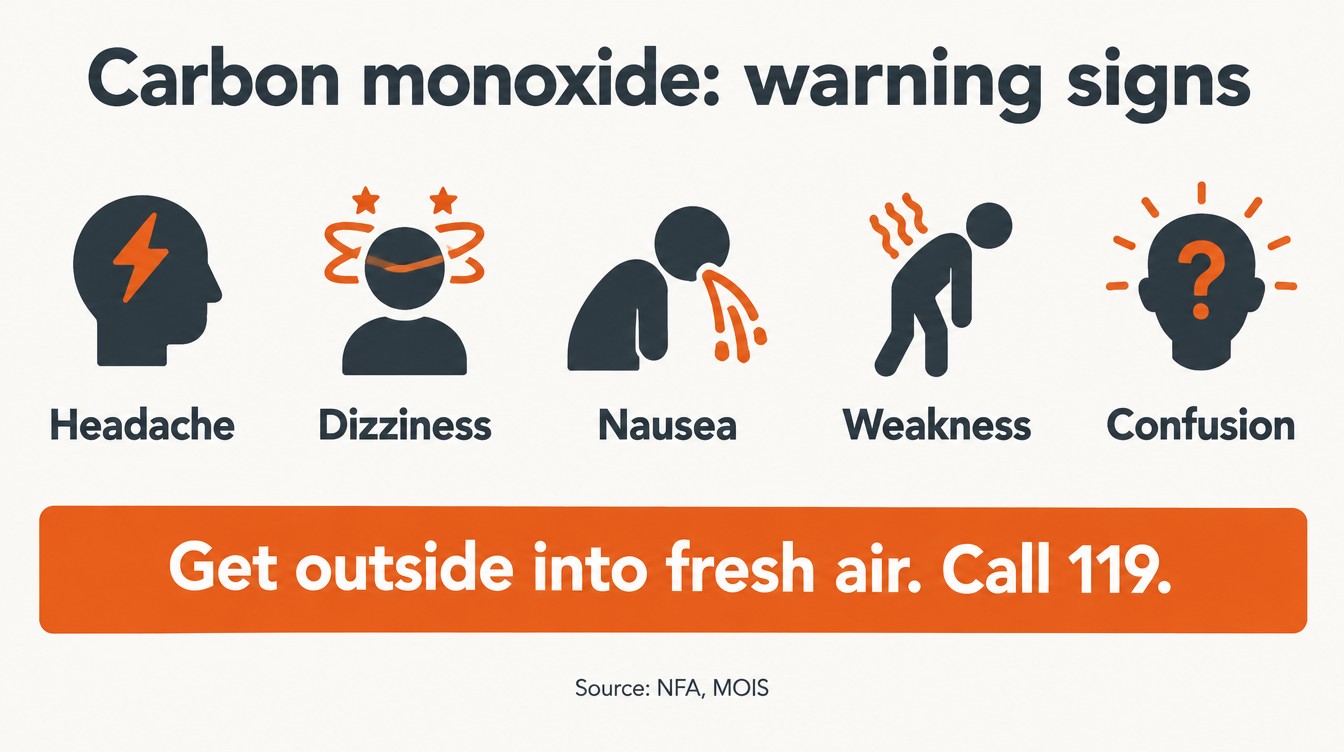
The NFA says early symptoms are headache, dizziness and nausea, and that it can progress to vomiting, difficulty breathing, numb hands and feet and general weakness; in severe cases the person becomes confused, keeps falling asleep even when woken, loses consciousness and can die. The NHS and CDC list the same core signs and add chest pain, and the NHS adds that symptoms may come and go, get worse in the affected room and get better when you leave. The CDC says CO symptoms are often described as flu-like, and that people who are asleep or have been drinking can die before they notice any symptoms.
| Sign | NFA (Korea) | NHS / CDC (independent check) |
|---|---|---|
| Headache, dizziness, nausea | Yes: the first signs | Yes: the most common symptoms |
| Vomiting, weakness | Yes: as it worsens | Yes: weakness, tiredness, being sick |
| Trouble breathing, numb hands and feet | Yes | NHS: shortness of breath, chest and muscle pain |
| Confusion, drowsiness, unconsciousness | Yes: severe; can be fatal | Yes: confusion, passing out |
| Better outdoors, worse indoors | Not stated | NHS: symptoms may ease when you leave the building |
| Several people in the same room unwell | Not stated | Not stated: but a useful clue, since everyone breathes the same air |
The last row is our reasoning, not an official statement: if you and a roommate or travel companion both feel flu-like only when you are at home or in the tent, take it seriously.
Where it comes from in Korea: indoors
The NFA lists the usual indoor causes: gaps in boiler and stove flue pipes (연통), gas leaks from a cooking range, a wood-fired ondol room (온돌방, the heated-floor tradition), plus instantaneous water heaters leaking gas, coal (갈탄) burned at construction sites and briquette grills (연탄구이) in restaurants. Outdoors and in vehicles it lists charcoal for cooking, and butane-gas heaters and hot-water mats. The NHS list for the UK is very similar: gas boilers, gas or paraffin heaters, wood, gas and coal fires, and barbecues or camping stoves used indoors.
For your flat or guesthouse, MOIS tells people to check before the boiler is switched on for the season:
- Clear paper and other flammable items from around the boiler.
- Check that the exhaust pipe (배기통) is not blocked or has not come loose, and that the piping is not corroded or dented.
- Keep the boiler-room vent (환기구) open at all times so harmful gas can leave.
- Install a CO leak alarm indoors.
- Call a professional if you see smoke or flame, hot air coming out, a flashing or dead indicator light, or unusual noise, vibration or smell.
If you rent, ask the landlord or agent. A short message such as “Could you have the boiler and flue checked before winter, and is there a CO alarm?” is reasonable. In the same release MOIS gives context on boiler fires: from 2021 to 2025 there were 790 home-boiler fires with 31 casualties from smoke, toxic gas or burns, concentrated from November to January, and November had 87 fires, about 1.3 times the monthly average of 66. These are fire figures, not CO poisoning counts, but they show why the first weeks of heating are the time to check. MOIS lists the causes as electrical faults 351 (44%), overheating or ageing 290 (37%), careless use or installation 75 (9%) and gas leak 14 (2%).
Gas leak versus CO: not the same thing
Korean city gas and LPG have a deliberate rotten-egg smell added so leaks are noticeable; KGS says users should smell before lighting. CO from a badly burning boiler does not smell. If you smell gas, KGS advice for homes is: close the burner valve, intermediate valve and cylinder or meter valve to stop the gas, open windows and doors wide, do not use fans, exhaust fans or any electrical switch (a spark can ignite the gas), tell your neighbours in a flat or apartment, then contact the gas supplier or the local city-gas office. KGS’s number is 1544-4500. If anyone feels unwell, get outside and call 119.
Where it comes from in Korea: tents, glamping and cars
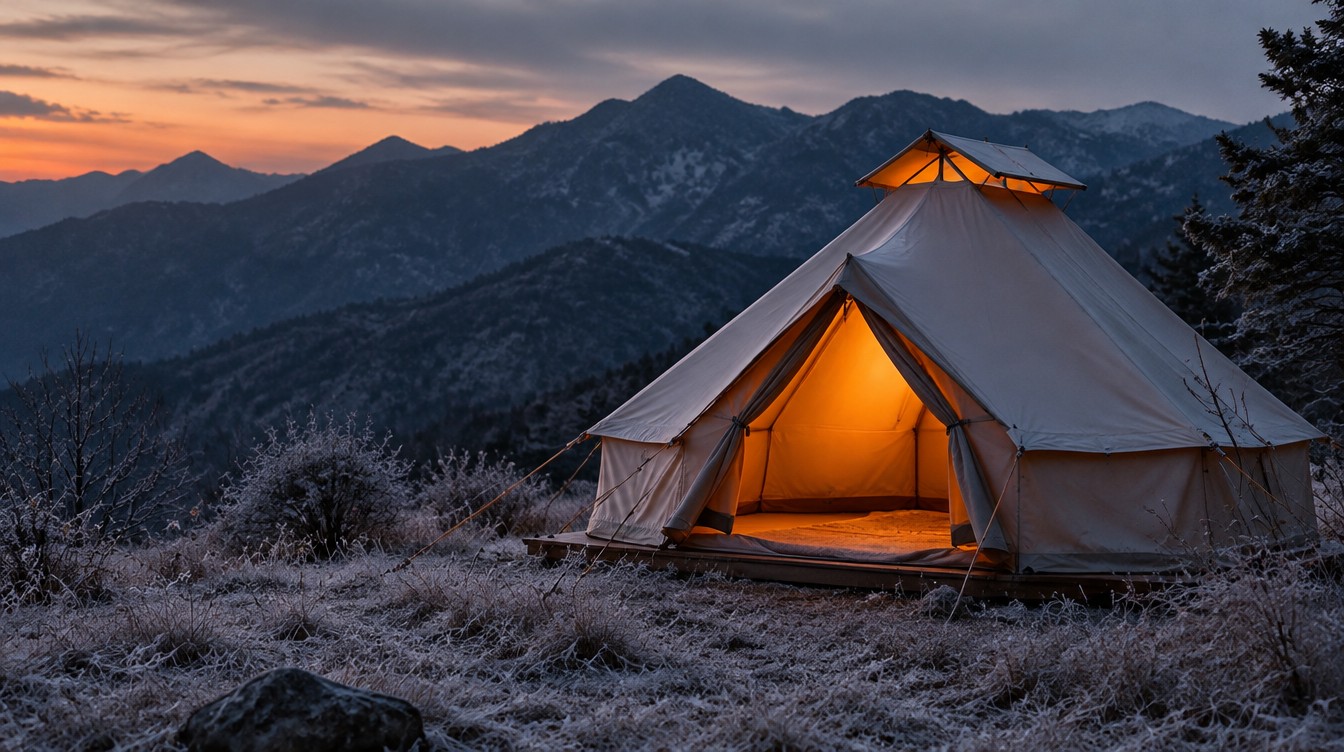
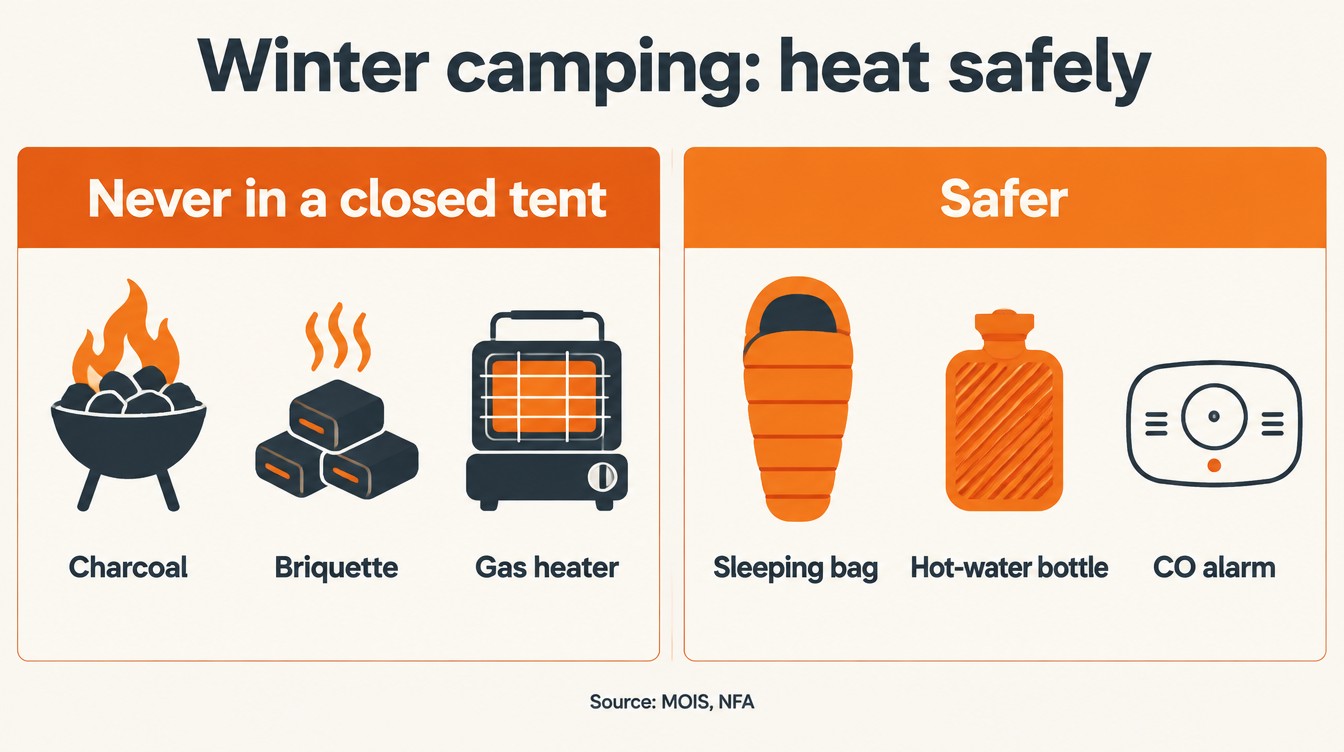
MOIS says that as camping has become popular, CO poisoning risk from heating products used inside tents has grown, and that demand for camping stays steady even in November when temperatures drop sharply. Its advice: avoid heating products that produce a lot of CO inside a tent, such as charcoal; keep warm with a sleeping bag or hot-water bottle; and, if you do have to use a heater, ventilate often and set up a portable CO alarm. The NFA says not to burn coal or wood in a vehicle or tent, and that if you use a butane-gas heater you should read the safety instructions and ventilate regularly.
| Heat source | What MOIS / NFA say | Our practical reading |
|---|---|---|
| Charcoal, briquette (연탄), coal | Avoid inside a tent; do not use coal or wood in tent or vehicle | Treat as outdoor-only; the CDC says never burn charcoal indoors |
| Butane or gas heater, stove | Follow the manual, ventilate often, use a portable CO alarm | If you must, keep vents open, never sleep with it running, check the alarm |
| Sleeping bag, hot-water bottle | MOIS: the recommended way to stay warm | Choose a bag rated for the night’s temperature |
| Electric blanket or electric mat | Not a combustion source | Only if the site has a power hook-up; see our guide to winter electricity bills below |
Because the MOIS wording is “avoid where possible” for tents, our checklist errs on the side of caution: if you do not need a burning heater, do not bring one. Also note that the CDC says never to use a portable gas camp stove indoors or flameless chemical heaters indoors.
Is a CO alarm required where you stay?
Rules differ by place, and two are worth knowing:
- Lodging (숙박업소). MOTIR said in August 2020 that, under an amendment to the Urban Gas Business Act enforcement rule effective 25 August 2020, installing or replacing a gas boiler requires a CO alarm, and lodging businesses where guests sleep (those that must register under the Public Hygiene Control Act) must install CO alarms. We could not confirm from the sources whether every small guesthouse, pension (펜션) or home-share falls under that definition, so ask your host.
- Campsites (야영장). MCST explained in May 2019 that, since 4 March 2019, camping-site operators must install CO alarms in the tents, glamping units and similar structures they provide to guests. The rule was limited to operator-supplied units because enforcement inside private tents is impractical. If you bring your own tent, no one will install the alarm for you.
Practical advice from the CDC and NHS for any alarm: fit one near every sleeping area (CDC) or in each room with a fuel-burning appliance (NHS), test the batteries regularly (CDC says when clocks change in spring and autumn), and replace the unit following the maker’s instructions or about every 5 years (CDC). A cheap portable battery alarm in your bag is the simplest upgrade for a guesthouse stay or a camping trip.
Checklist: before you sleep somewhere new this winter
| Where | Check | Done |
|---|---|---|
| Rented flat or villa | Ask who services the boiler and when it was last checked; find the boiler room and make sure the vent is not blocked or taped over | ☐ |
| Rented flat or villa | Look for a CO alarm near the bedroom; test the button; check the date on the label | ☐ |
| Guesthouse, pension, farm stay | Ask “Is there a carbon monoxide alarm in this room?” Look at the room: boiler room door, any stove or ondol fire | ☐ |
| Guesthouse with ondol or wood heating | Do not close all vents to “keep the heat in”; stop if anyone gets a headache | ☐ |
| Camping or glamping | Confirm the glamping unit has an alarm; for your own tent, pack a portable alarm and a warmer sleeping bag | ☐ |
| Camping or car camping | No charcoal, briquette or wood burning in a tent or car; keep vents open; do not leave an engine running to heat a closed car | ☐ |
| Everyone | Save 119 in your phone and know your exact address or campsite name; note the 1339 and 1330 numbers below | ☐ |
What to do if you suspect CO poisoning
The NFA’s instruction is short: if there are symptoms, ventilate at once so the person can breathe fresh air, and report to 119. The NHS says to stop using the appliance if you can, go outside and get medical advice, and not to go back in until you have it. Putting that together for Korea:
- Get everyone out into fresh air (ventilate and leave the room or tent). If you can do it quickly and safely, switch off the heater or boiler and open windows on the way.
- Call 119 (fire and ambulance). If you do not speak Korean, say “English, please” or “Interpreter, please” when the call connects: VISITKOREA says the operator will bring in a professional interpreter. Give the address or campsite name, and say “carbon monoxide” or “gas poisoning”.
- Do not drive yourself if you feel unwell; the NHS advises asking someone else or calling an ambulance.
- Tell the emergency team what was burning, how long you were inside and who else was in the room or tent, including any pets.
- Keep others out until the source has been checked by a gas company or technician.
- Follow up. Even if you feel better, tell the doctor about the exposure. Segye reported, citing studies, that 10 to 40% of poisoned patients developed delayed memory, thinking or walking problems 2 to 40 days after recovering; that is a press-reported research range, so ask your own doctor about follow-up.
For general questions about health matters, the KDCA call centre is 1339, and the Korea Travel Hotline 1330 offers interpretation for travellers; neither replaces 119 in an emergency. Our guide to heart attack warning signs and when to call 119 explains the same emergency steps for another winter risk, and our piece on hypothermia and frostbite in Korea’s winter covers cold-related illness. If you want a non-burning way to stay warm, how the winter tiers push up an electricity bill shows what an electric heater may cost.
FAQ
Q. Can I smell carbon monoxide?
No. The NHS and CDC both describe it as colourless and odourless. Korean city gas is given a smell so leaks are noticeable (KGS), but CO from a badly burning boiler or heater has no smell. That is why a CO alarm matters.
Q. Do Korean homes with ondol or gas boilers have CO alarms?
MOIS tells households to install one, and MOTIR says a CO alarm is required when a gas boiler is newly installed or replaced (since 25 August 2020) and in registered lodging businesses. Existing flats may not have one, so look near the bedroom and ask your landlord. A battery-powered alarm can be bought and fitted without any work.
Q. Is it safe to use a charcoal or gas heater inside a tent?
MOIS says to avoid heaters such as charcoal that produce a lot of CO inside a tent, and to rely on a sleeping bag or hot-water bottle. NFA says not to burn coal or wood in a tent or vehicle and to ventilate if you use a butane heater. The CDC says never to burn charcoal indoors. If you do use any burning heater, keep vents open and use a CO alarm.
Q. Who do I call in Korea if I think someone has CO poisoning?
119. Say “English, please” if you need an interpreter. Get everyone into fresh air first, and do not go back inside until the source has been checked. For a gas smell without symptoms, KGS gives 1544-4500, and you should shut the gas valves and open windows without touching electrical switches.
Q. What is the difference between a gas leak and CO poisoning?
A gas leak is unburned fuel escaping, and it smells and can explode (so no sparks or switches). CO is a poisonous gas made by incomplete burning, which is odourless and harms you by blocking oxygen in the blood. Both need fresh air and a call to 119 if anyone feels ill.
Q. Does a guesthouse or Airbnb in Korea have to have a CO alarm?
MOTIR says lodging businesses that must register under the Public Hygiene Control Act have to install one. We could not confirm from official pages whether every small guesthouse or home-share is covered, so ask the host before you book and carry a portable alarm if the answer is unclear.
General information, not medical advice. Diagnosis and treatment are for doctors and emergency services; in an emergency call 119 immediately. This page is a summary of official guidance as published on the dates above; check the NFA (https://www.nfa.go.kr), MOIS (https://www.mois.go.kr) or call KDCA 1339 for current advice.
Sources
- MOIS press release, “Check your boiler before use to prevent fires and CO poisoning” (30 October 2026): https://www.mois.go.kr/frt/bbs/type010/commonSelectBoardArticle.do?bbsId=BBSMSTR_000000000008&nttId=130608
- NFA, “Carbon monoxide poisoning” life-safety information page (causes, symptoms, prevention): https://www.nfa.go.kr/nfa/safetyinfo/lifesafety/stats/0001/
- YTN, Gangwon Fire Headquarters winter campsite warning (10 November 2026): https://www.ytn.co.kr/_ln/0115_202611101416353895
- Segye Ilbo, report citing KDCA emergency-department injury surveillance (2 March 2026): https://www.segye.com/newsView/20260302500995
- MOTIR, “CO alarms mandatory in lodging” (24 August 2020): https://www.motir.go.kr/kor/article/ATCL3f49a5a8c/163241/view
- MCST, press clarification on CO alarms at campsites (10 May 2019): https://www.mcst.go.kr/site/s_notice/expPress/expPressView.jsp?pSeq=17282
- KGS, emergency action for gas leaks (1544-4500): https://www.kgs.or.kr/kgs/abad/view.do
- VISITKOREA, “Disaster Safety Services for International Visitors in Korea” (119 interpreter, 2 October 2025): https://english.visitkorea.or.kr/svc/contents/contentsView.do?vcontsId=248145
- CDC, “Carbon Monoxide (CO) Poisoning Basics” (reviewed 26 October 2026): https://www.cdc.gov/carbon-monoxide/about/index.html
- NHS, “Carbon monoxide poisoning”: https://www.nhs.uk/conditions/carbon-monoxide-poisoning/
How we checked: the MOIS, MOTIR, MCST, KGS, VISITKOREA, CDC and NHS pages and the Segye and YTN articles were opened and read on 14 November 2026; the NFA page text was read through a search extract because the page returned an error when fetched directly. Calculations (percentages of boiler fires) are ours from the MOIS counts.
Researched and drafted with AI assistance; checked against the sources listed.

One Comment