H. pylori Positive on a Korean Health Checkup: Do You Need Treatment?
Haesul Health desk (AI-assisted). As of 1 November 2026 (KST), based on Korea’s National Cancer Information Center and the 2025 Korean H. pylori guideline. This is not medical advice; consult your doctor.
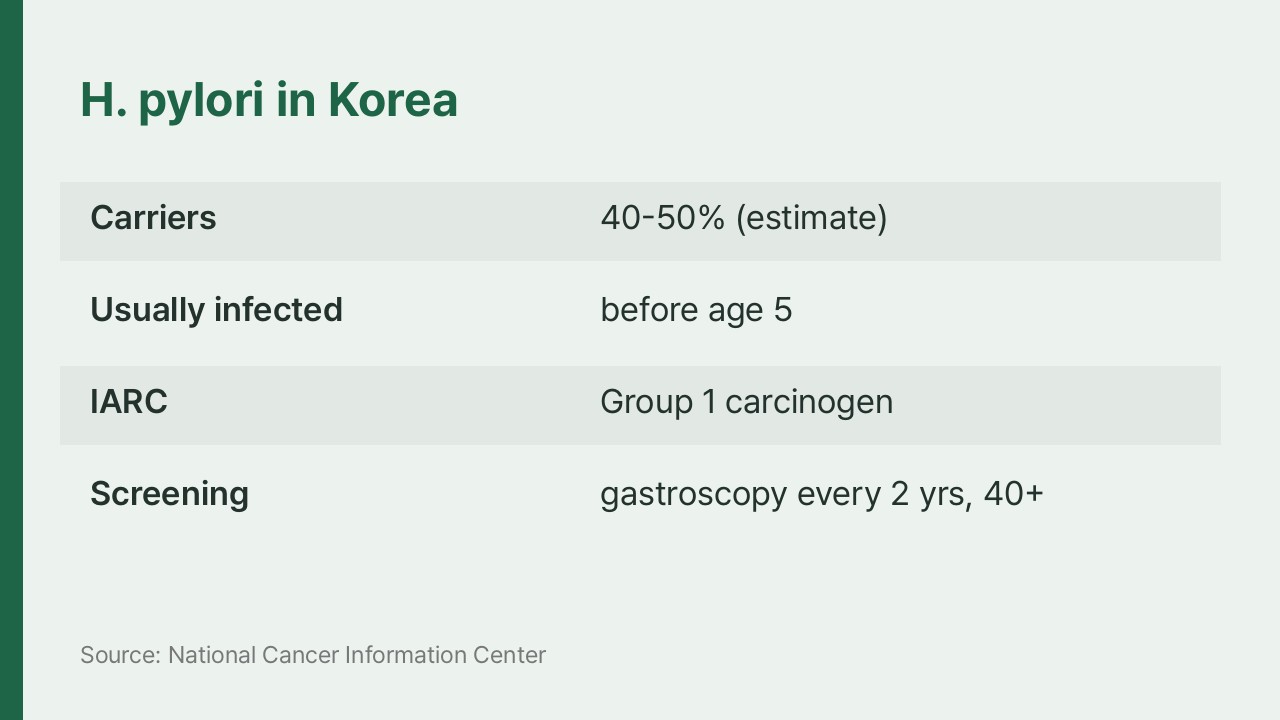
Quick answer: H. pylori is carried by an estimated 40-50% of people in Korea. Treatment is clearly recommended for peptic ulcer, early gastric cancer and MALT lymphoma; otherwise your doctor decides based on the endoscopy. Regular gastroscopy every 2 years from age 40 matters more for cancer prevention.
What a positive result means
Helicobacter pylori is a bacterium that lives in the stomach lining. Korea’s National Cancer Information Center (NCIC) estimates that 40-50% of people in Korea carry it, usually picked up before age five through close family contact. Most carriers never have symptoms. A positive result is common and does not mean you have, or will get, stomach cancer.
When treatment is clearly recommended
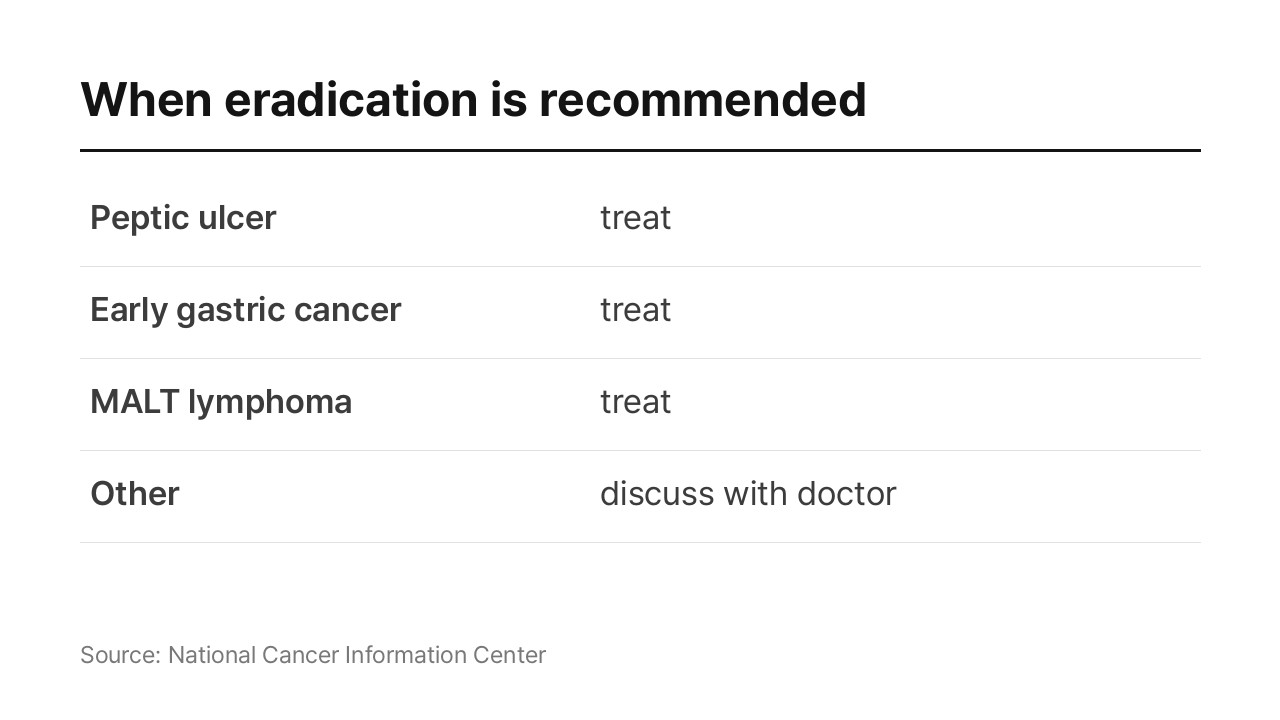
NCIC says that in general, H. pylori does not have to be treated in every carrier. Eradication with antibiotics should be done when you have:
| Situation | Eradication |
|---|---|
| Peptic ulcer (stomach or duodenal) | Treat |
| Early gastric cancer (after treatment) | Treat |
| Gastric MALT lymphoma | Treat |
| Other positive results | Decide with your doctor based on endoscopy findings |
(Source: National Cancer Information Center, Korea)
The International Agency for Research on Cancer (IARC) classifies H. pylori infection as a Group 1 carcinogen for stomach cancer, which is why many Korean doctors also discuss treatment when an endoscopy shows atrophic gastritis or when there is a family history of stomach cancer.
Which test did you have?
| Test | What it tells you |
|---|---|
| Urea breath test | Current infection |
| Endoscopic biopsy / rapid urease test | Current infection, taken during gastroscopy |
| Stool antigen test | Current infection |
| Blood antibody (serology) | Can stay positive after a past infection |
A positive blood antibody result can reflect a past infection, so doctors usually confirm with a breath test or endoscopy before treating. Korean guidelines advise stopping acid-suppressing drugs (PPIs) for about 2 weeks and antibiotics for about 4 weeks before breath or biopsy testing, as they can cause false negatives. Always follow your clinic’s instructions.
What treatment and follow-up look like
- Treatment is usually a 1-2 week course combining antibiotics with an acid-suppressing drug.
- Finish the full course even if side effects such as loose stools or a bitter taste appear; stopping early raises the risk of failure and antibiotic resistance.
- Eradication is checked again at least 4 weeks after finishing treatment.
- If the bacteria remain, a different drug combination can be used.
Screening matters more than the bacteria
NCIC stresses that treating or preventing H. pylori alone cannot reliably prevent stomach cancer, and that regular screening is the best protection. Under Korea’s national cancer screening programme, people aged 40 and over are offered a gastroscopy every 2 years. Cutting down on salty food and not smoking also help.

Questions to bring to your doctor
- Was my result from a breath test, biopsy or blood test?
- Did the endoscopy show ulcers, atrophic gastritis or intestinal metaplasia?
- Do I need eradication now, and how will we confirm it worked?
- Should my family members be tested?
FAQ
Q. Is H. pylori common in Korea?
Yes. Korea’s National Cancer Information Center estimates 40-50% of people in Korea carry it.
Q. Do I have to treat a positive H. pylori result?
Not always. Treatment is recommended for peptic ulcer, early gastric cancer and MALT lymphoma; otherwise decide with your doctor based on endoscopy findings.
Q. Can yogurt or probiotics cure H. pylori?
NCIC says there is not enough evidence in humans that yogurt or probiotics treat the infection.
Q. How long after treatment should I retest?
At least 4 weeks after finishing treatment, following your doctor’s instructions.
Q. How often is stomach cancer screening in Korea?
Every 2 years for people aged 40 and over under the national programme.
Related guides
Sources
- National Cancer Information Center (NCC Korea), Helicobacter pylori (cancer.go.kr) (checked 1 November 2026)
- Korean College of Helicobacter and Upper Gastrointestinal Research, 2025 H. pylori guideline (Korean J Gastroenterol) (checked 1 November 2026)
This article is not medical advice. It was written with AI assistance and fact-checked against official sources.